Research Project 2026–2027
01Airbus
Explainable AI interface for AI-assisted helicopter landing.


Vinland
Chubina (Slowed) · East Duo
Research Project 2026–2027
01Explainable AI interface for AI-assisted helicopter landing.
In-Car Application 2026
02Served as UX Lead for an international in-car application.
Allvest & Allianz products 2025–2026
03UX/UI design for an upcoming international go-live, including user research, usability testing and the design system.
 Completed
Peer-reviewed paper 2026
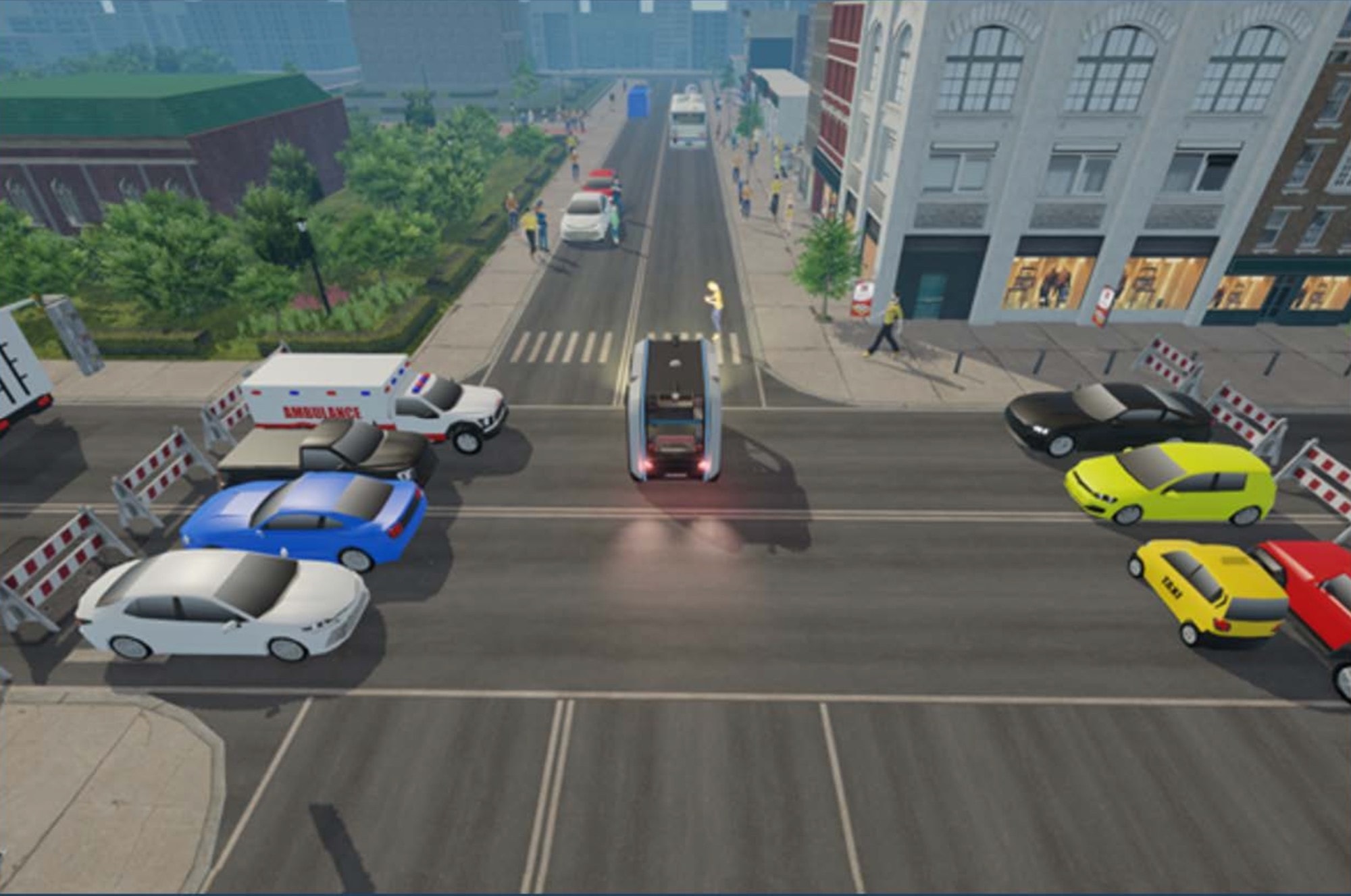
04Enhancing Teleoperation Performance for Automated Vehicles Through Bird’s-Eye View Augmentation
 Completed
TH Ingolstadt 2025
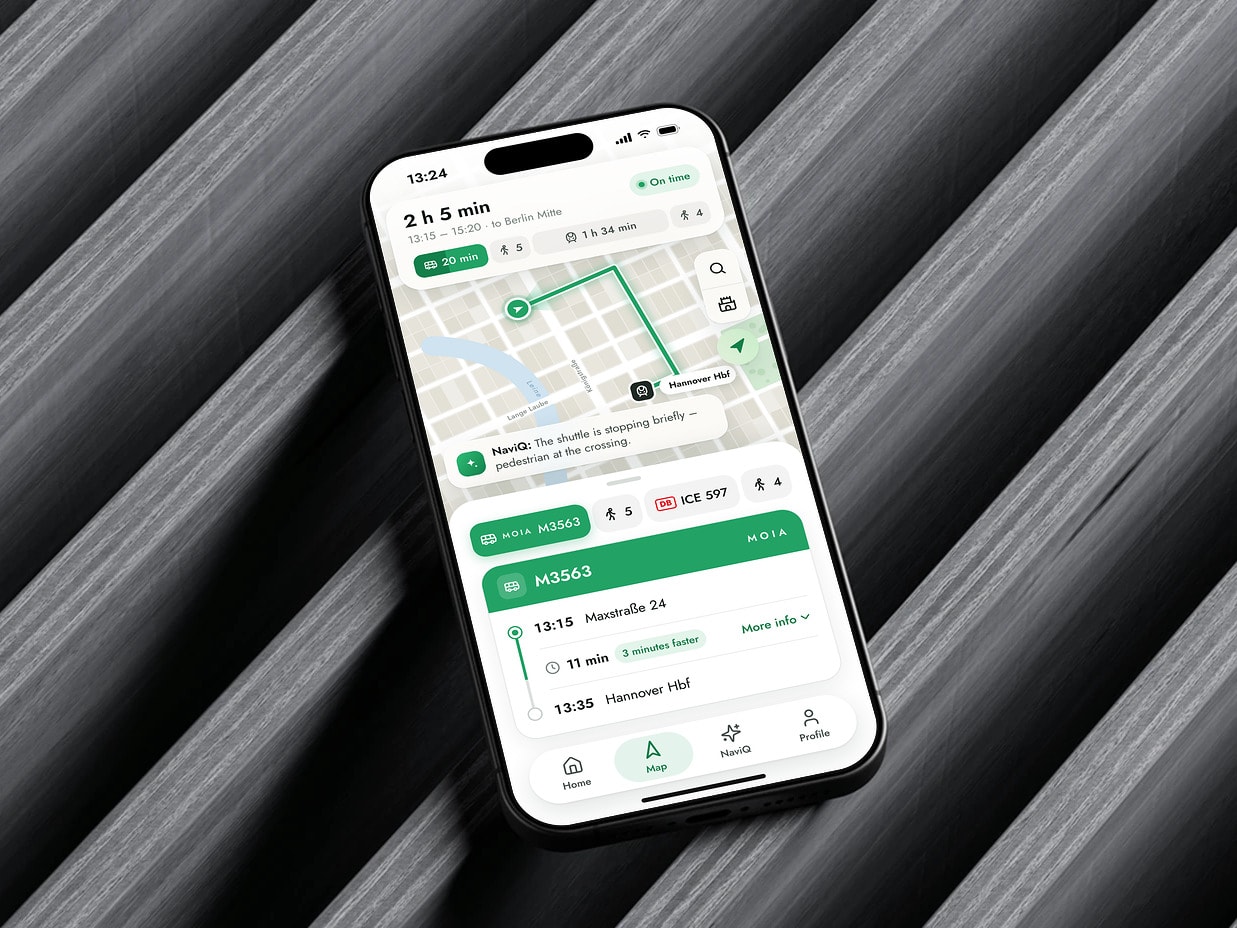
05Mobility app that makes autonomous shuttles in public transport transparent, with an explainable AI assistant.
 Completed
THI × QUT, Linköping & York 2024
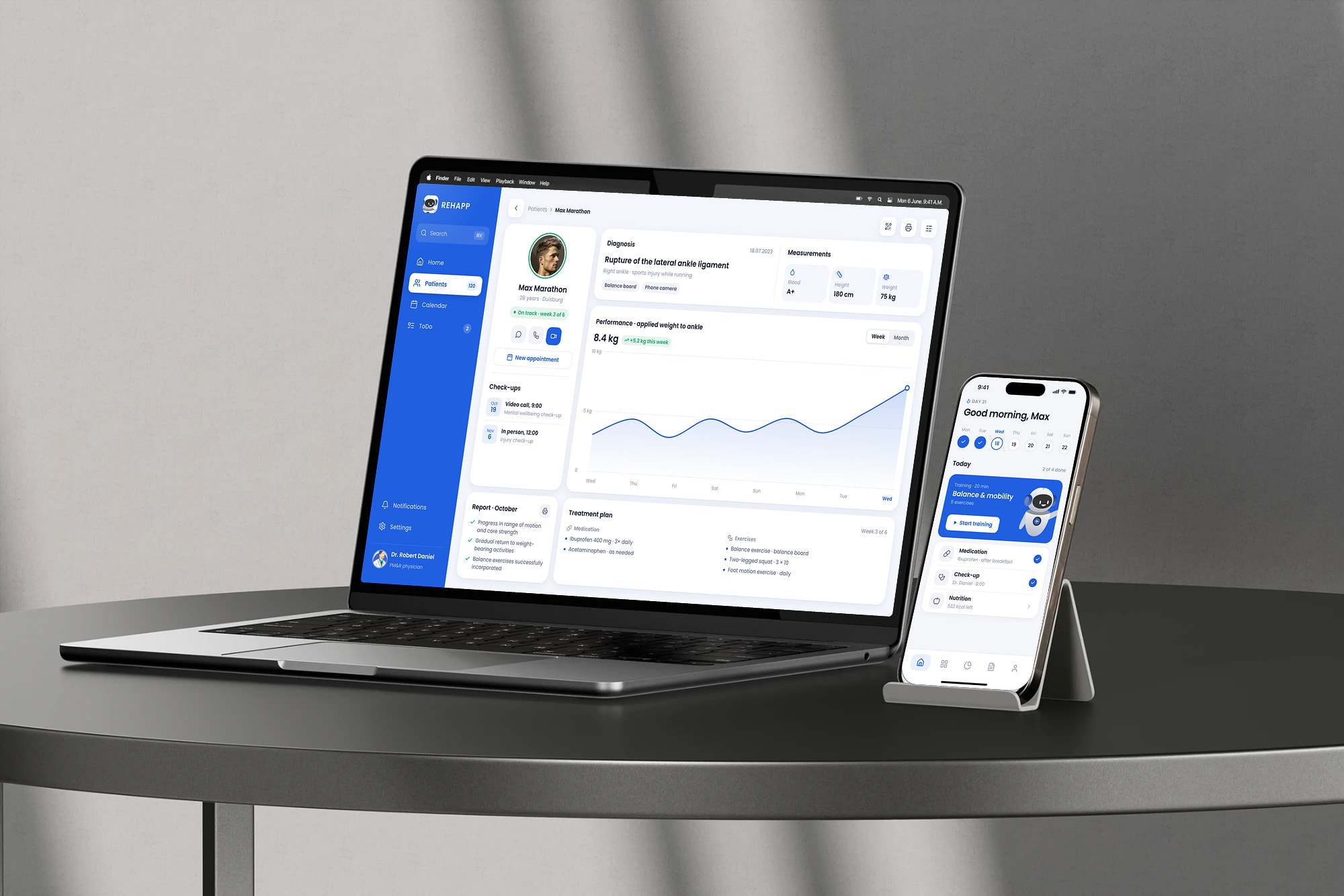
06Remote rehabilitation for amateur athletes and their doctors, supported by a smart training gadget.
I’m a UX/UI designer passionate about shaping the future.
Currently pursuing my M.Sc. in User Experience Design at Technische Hochschule Ingolstadt. Having spent an exchange semester at Hanyang University in South Korea, I love exploring different perspectives and cultures – a curiosity that directly shapes how I approach complex problem-solving and emerging technologies like AI.
Outside of research and design, you’ll usually find me on the padel court, traveling, or diving into new challenges—whether that’s boxing or experimenting with new recipes in the kitchen.
Suggested answers are written by me. Live answers are generated by AI (Claude) from the facts on this site; your question is sent to Anthropic for that and isn’t stored here.
Enhancing Teleoperation Performance for Automated Vehicles Through Bird’s-Eye View Augmentation
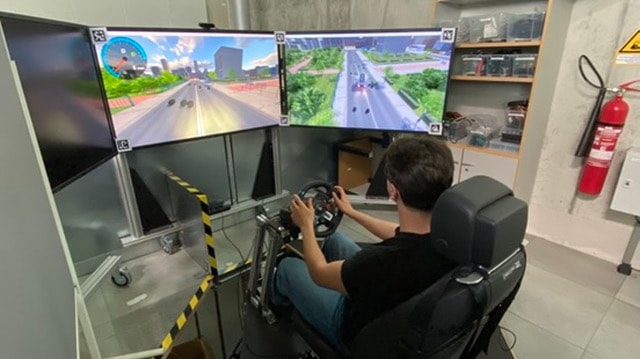
A peer-reviewed paper on the teleoperation of automated vehicles, published at the IEEE Intelligent Vehicles Symposium 2026.
As co-author, I contributed to every stage of the research: the study design, building the scenarios for the driving simulator, running the study, analysing the results and writing the paper.
By providing remote control in edge cases, teleoperation can support the deployment of automated vehicles (AVs) on public roads. The limited field of view of the vehicle-mounted cameras poses a significant challenge for perceiving relevant objects in the environment and for acquiring situational and spatial awareness. One approach to improving teleoperation performance is to increase the amount of information available by adding additional perspectives.
This paper investigates the application of bird’s-eye views provided by a drone following the AV. We conducted a driving simulation study in which N = 30 participants navigated three complex urban scenarios, with or without the additional view. The results demonstrate that participants completed the scenarios significantly faster with the bird’s-eye view than with the conventional view alone. Furthermore, the additional exocentric perspective seemed to primarily improve spatial awareness. At the same time, the immediate surroundings could be better observed through the vehicle’s egocentric camera perspective.
The results, therefore, recommend integrating additional views into HMIs for teleoperation to support the safe and reliable handling of AVs, even in complex urban environments.
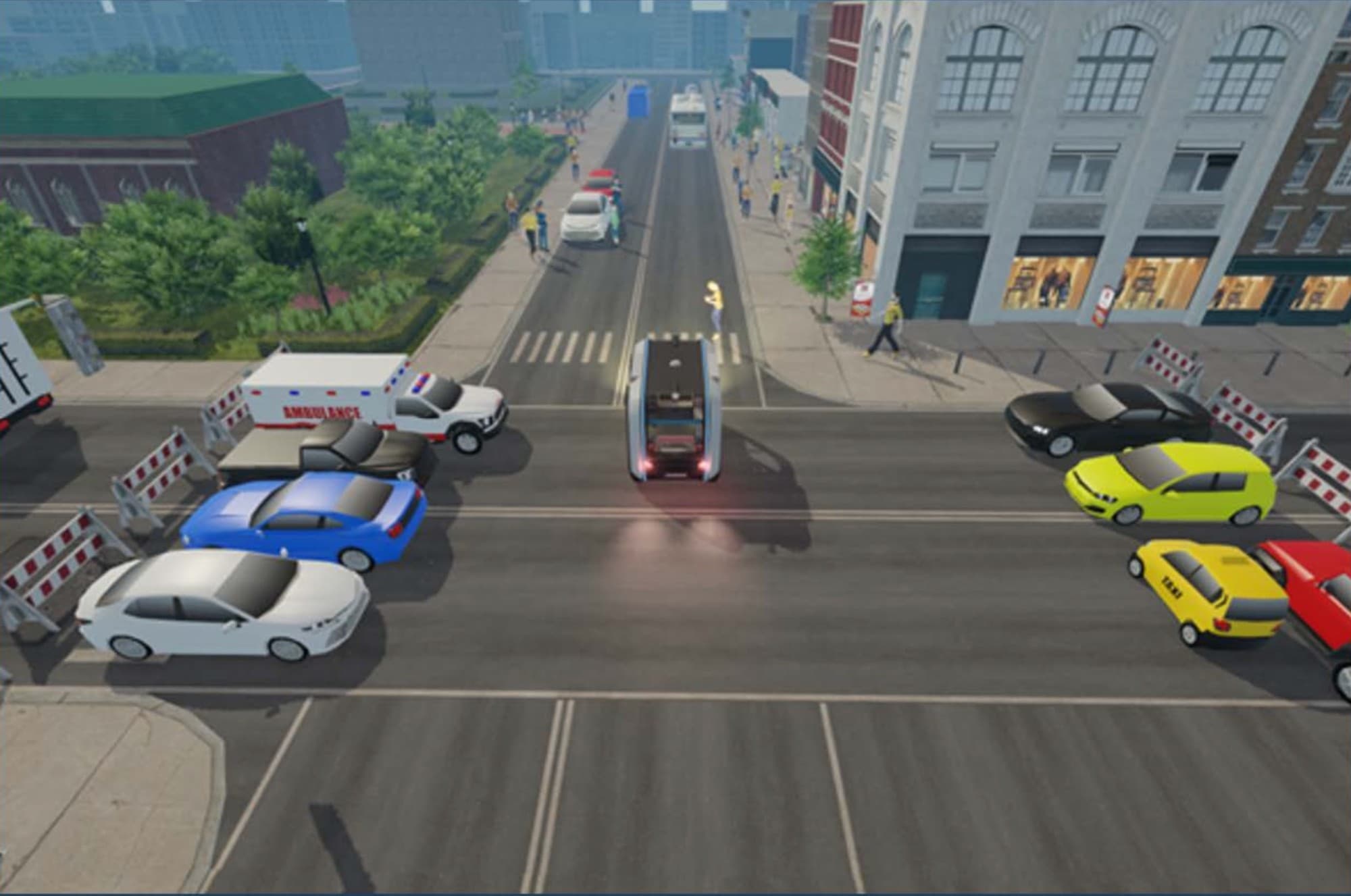
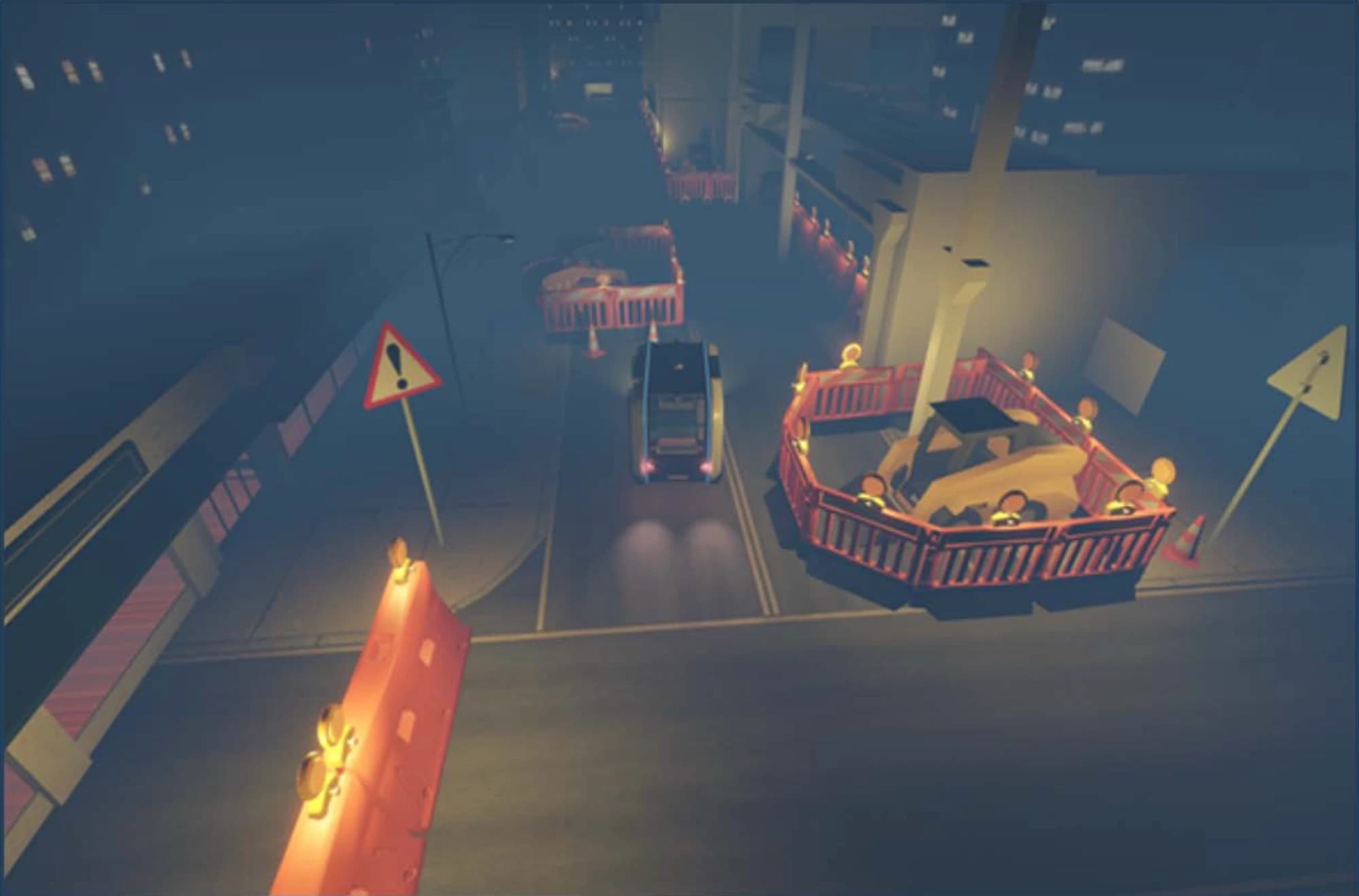
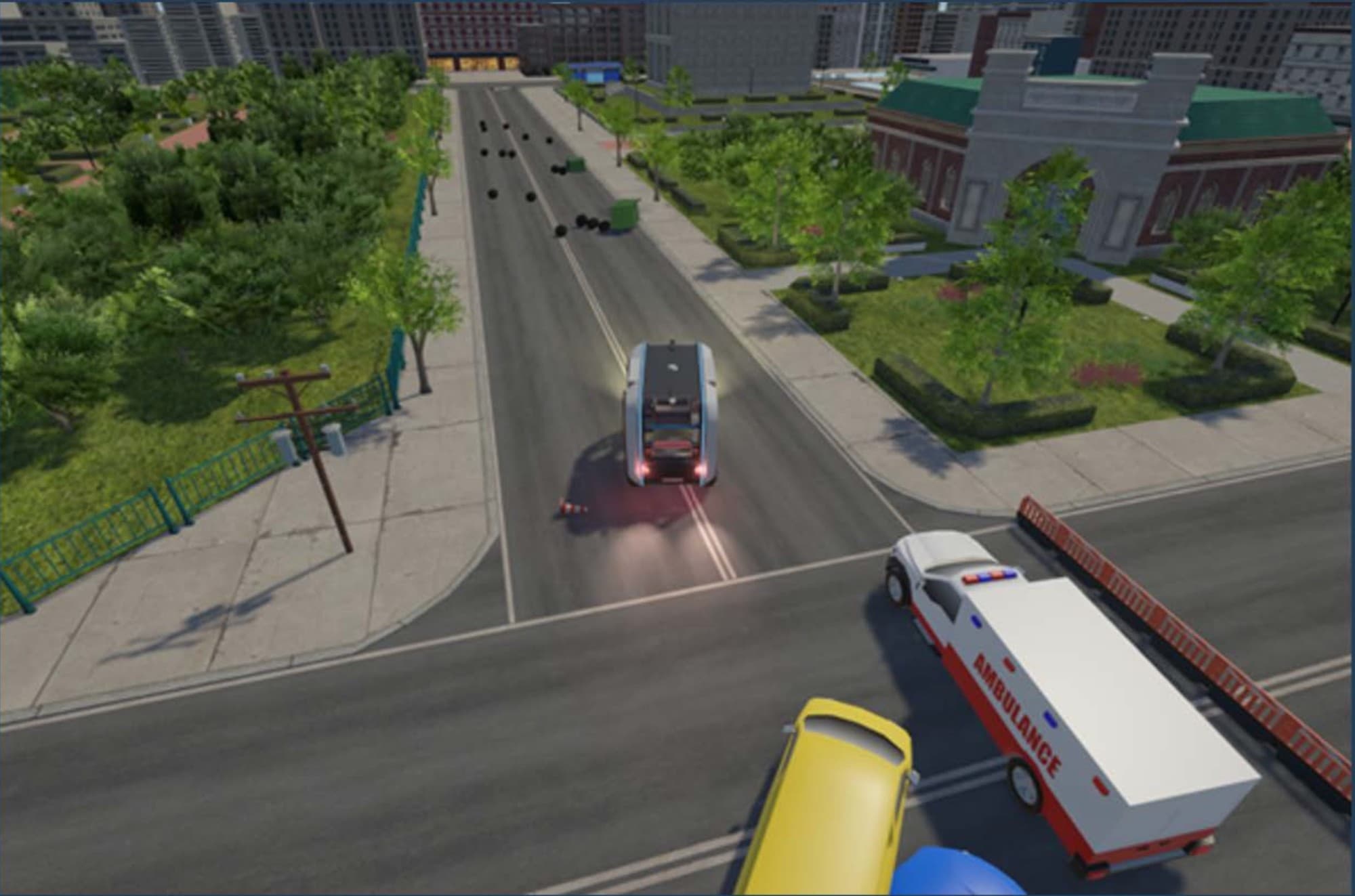
For the driving simulator study, we built three complex urban scenarios in Unity: a busy street with many pedestrians, a construction site at night and debris on the road. Participants steered the automated vehicle remotely through each scenario, with and without the bird’s-eye view of the drone.
The complete paper, including the study setup, the statistical analysis and the discussion of both perspectives, is available on IEEE Xplore.